Elevating Digital Narratives: The Strategic Value of the 100 Book Icons Set, Isometric 3d Style
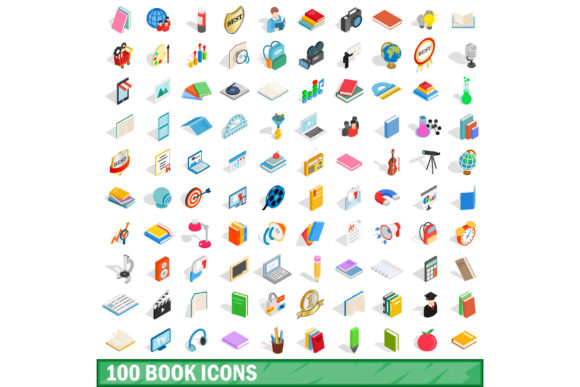
In an era where digital attention spans are shrinking and visual competition is fierce, the ability to communicate complex ideas through immediate, high-fidelity imagery has never been more critical. For professionals, creators, entrepreneurs, and marketers, the visual language we deploy must be both aesthetically compelling and functionally robust. This is where the intersection of traditional symbolism and modern rendering techniques becomes a powerful asset. Specifically, the 100 Book Icons Set, Isometric 3d Style represents a significant shift in how educational and literary concepts are visualized in the digital marketplace.
Gone are the days when flat, two-dimensional symbols were sufficient for conveying depth and value. Today's users expect interfaces that feel tactile, environments that suggest space, and graphics that command respect through their dimensional integrity. The adoption of the 100 book icons set in isometric 3d style is not merely a stylistic choice; it is a strategic response to evolving consumer expectations and technological capabilities.
The Evolution of Visual Communication in the Knowledge Economy
The global economy is increasingly driven by information, education, and intellectual property. Whether it is an online learning platform, a digital library, a publishing house, or a corporate training portal, the "book" remains the universal symbol of knowledge. However, the representation of this symbol has undergone a radical transformation. Flat design, while clean and minimalist, often lacks the gravitas required to convey the weight and substance of the content it represents.
This is where the 100 Book Icons Set, Isometric 3d Style excels. By utilizing isometric projection, designers can create a sense of three-dimensionality without the distortion of perspective. This creates a unique visual language that feels structured, organized, and precise. It bridges the gap between the abstract concept of reading and the tangible reality of physical objects. For entrepreneurs building EdTech startups or marketers promoting literacy initiatives, these icons provide a visual shorthand that instantly communicates quality, structure, and modernity.
Furthermore, this style aligns with broader trends in user interface (UI) and user experience (UX) design. As web browsers and mobile devices have become more powerful, they can handle more complex rendering tasks. Users are now accustomed to rich media experiences. A flat icon might look out of place on a landing page that features high-resolution photography and video backgrounds. In contrast, the 100 book icons set in isometric 3d style complements these elements, creating a cohesive visual ecosystem that guides the user's eye and enhances engagement.
Bridging Creativity and Technical Precision
One of the most compelling aspects of this vector illustration collection is its versatility across various professional workflows. The availability of the set in multiple formats—JPG, EPS, AI, PSD, PNG—ensures that it fits seamlessly into the diverse toolkits used by today's creatives. This flexibility is essential for freelancers who may need to switch between raster-based photo editing software like Adobe Photoshop and vector-based design tools like Adobe Illustrator or Affinity Designer.
For the graphic designer, the Isometric 3d Style offers a layer of complexity that adds interest without cluttering the composition. Unlike photorealistic 3D models, which can sometimes appear heavy or slow-loading, isometric illustrations strike a perfect balance. They possess volume and shadow, giving them presence, yet they remain lightweight enough for web optimization. This makes them ideal for responsive web design, where performance and aesthetics must coexist harmoniously.
Consider the workflow of a marketing team launching a new course series. They might use the 100 book icons set in isometric 3d style to create social media assets, email headers, and presentation decks. The consistency of the style ensures brand cohesion across all channels. Because the set includes one hundred distinct variations, there is ample opportunity to differentiate between categories such as fiction, non-fiction, technical manuals, or academic research, all while maintaining a unified visual identity.
Meeting the Needs of Modern Digital Workflows
The relevance of this icon set extends beyond mere aesthetics; it addresses specific functional needs in the modern digital landscape. As remote work and digital collaboration become standard, the need for clear, universally understood visual cues has intensified. Teams distributed across different time zones require communication materials that are self-explanatory and visually engaging.
The 100 Book Icons Set, Isometric 3d Style serves as a versatile toolkit for these scenarios. For instance, in the development of gamified learning applications, isometric icons can represent achievements, levels, or resources. The 3D effect adds a layer of interactivity, making the digital environment feel more immersive. Similarly, in the realm of e-commerce, publishers and authors can use these icons to highlight bestsellers or specific genres, drawing the customer's attention to key products.
Moreover, the scalability of vector formats like AI and EPS means that these assets can be resized from a small favicon to a massive billboard without losing quality. This adaptability is crucial for businesses that operate across multiple platforms, from mobile apps to large-format print collateral. The inclusion of PSD files further empowers designers to manipulate layers, adjust lighting, and customize colors to match specific brand guidelines, ensuring that the final output is perfectly tailored to the project's requirements.
Why Professionals Are Investing in Isometric Assets
There is a noticeable shift in the creative industry towards assets that offer depth and narrative potential. Marketers and content creators are realizing that static images are no longer enough to capture the imagination of a digitally native audience. They are looking for visuals that tell a story, invite exploration, and encourage interaction. The 100 book icons set in isometric 3d style provides exactly this kind of dynamic visual element.
When integrated into infographics, these icons help break down complex data related to literacy rates, reading habits, or educational statistics. The 3D aspect adds a sense of importance to the data points, making the information more digestible and memorable. For educators and institutions, this translates to better engagement with students and parents. It signals a forward-thinking approach to education, suggesting that the institution embraces modern technology and innovative teaching methods.
Additionally, the trend towards "micro-interactions" in UI design favors isometric illustrations. These subtle animations, where icons might rotate or expand slightly on hover, rely on the underlying geometry of the isometric shape. The 100 Book Icons Set provides the foundational geometry necessary for these interactions, allowing developers to bring static designs to life with code. This synergy between design and development is a key driver of modern web success.
Practical Applications Across Industries
The utility of the 100 Book Icons Set, Isometric 3d Style spans a wide array of sectors. In the publishing industry, it can be used for catalogues, website navigation, and promotional materials. In the corporate sector, it is invaluable for internal knowledge management systems, training modules, and documentation portals. Even in lifestyle and wellness contexts, where reading is promoted as a form of mental health maintenance, these icons can add a touch of sophistication to blog posts and app interfaces.
For freelancers and independent creators, having access to a comprehensive set like this is a competitive advantage. It allows them to deliver high-quality, professional-grade assets to clients without the time-consuming process of modeling 3D assets from scratch. The availability of PNG files with transparent backgrounds further simplifies the integration process, enabling quick assembly of layouts for client presentations or mockups.
Ultimately, the decision to incorporate the 100 book icons set in isometric 3d style into a project is a decision to prioritize quality and clarity. It reflects an understanding that in a crowded digital marketplace, visual distinction is paramount. By choosing a style that combines the timeless appeal of books with the cutting-edge precision of isometric 3D design, professionals can ensure their content stands out, resonates with audiences, and effectively communicates the value of the knowledge being shared.
As we move further into a future defined by digital immersion, the demand for high-quality, versatile, and visually rich assets will only grow. The 100 Book Icons Set, Isometric 3d Style is more than just a collection of graphics; it is a tool for empowerment, enabling creators to build narratives that are as deep and engaging as the stories themselves. Whether you are designing a new app, revamping a website, or preparing a pitch deck, integrating these assets can elevate your project from good to exceptional.