100 Profession Icons Set for Modern Design Projects
In the fast-paced world of digital design, visual communication often hinges on a single, well-crafted image. Whether you are building a portfolio website, creating an educational infographic, or designing a mobile app interface, the ability to represent complex roles quickly and clearly is invaluable. This is where a comprehensive collection becomes more than just a file; it becomes a foundational asset for your creative workflow. The 100 Profession Icons Set offers exactly this: a versatile toolkit designed to bring clarity to any project involving human labor, expertise, and industry.
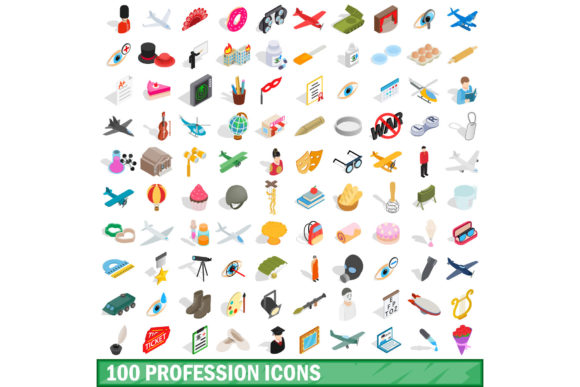
What makes this specific collection stand out is its dual approach to visual storytelling. It provides standard flat representations alongside a specialized 100 profession icons set in isometric 3D style. This duality allows designers to maintain consistency across different media without sacrificing depth or engagement. When you need a clean, minimalist look for a dashboard, the flat vectors work seamlessly. However, when you want to add dimension, texture, and a sense of scale to a landing page or a presentation slide, the isometric 3D variations provide that necessary pop. This flexibility ensures that your visual identity remains cohesive while adapting to the specific needs of the platform you are designing for.
Bridging the Gap Between Concept and Reality
Designers often face the challenge of translating abstract job titles into recognizable symbols. A generic "worker" icon might suffice for a broad audience, but it lacks the nuance required for professional contexts. By utilizing a curated set of 100 distinct professions, you move beyond clichés. You can differentiate between a software architect and a web developer, or distinguish between a culinary artist and a food scientist. This level of detail fosters trust with your audience because it signals that you understand the specifics of their field.
The inclusion of both vector formats (EPS, AI) and raster formats (JPG, PNG, PSD) means you have control over how these assets behave in your final output. For print materials like brochures or business cards, the EPS and AI files ensure crisp lines at any size. For web use and social media, the high-resolution PNGs and JPGs offer immediate compatibility without the need for conversion tools. This variety in file formats supports a seamless transition from concept to final product, saving valuable time during the production phase.
Exploring Isometric Depth in Professional Illustrations
The isometric 3D style represents a significant trend in modern UI/UX design. Unlike perspective drawings that vanish at a horizon line, isometric illustrations maintain parallel lines, creating a structured, technical, yet approachable aesthetic. This style is particularly effective for explaining processes or showcasing a team structure. Imagine a flowchart for a logistics company where each step is represented by a 3D icon of a truck, a warehouse worker, and a package handler. The depth adds a layer of realism that flat icons simply cannot achieve, making the information easier to digest.
For educators and content creators, these 3D icons serve as powerful hooks. They break up long blocks of text and provide visual anchors that keep readers engaged. When illustrating a career path or a skills matrix, the slight shadowing and volume of the isometric figures guide the eye naturally through the hierarchy of information. This is not merely decorative; it is functional design that enhances comprehension.
Practical Applications Across Industries
The utility of this icon set extends far beyond simple decoration. Entrepreneurs and small business owners can leverage these assets to build brand identities that feel established and diverse. A startup in the healthcare sector might use specific medical icons to illustrate their services, while a tech firm could highlight their engineering capabilities. The key lies in selecting the right subset of the 100 professions to tell your unique story.
- Educational Platforms: Teachers and course creators can use the icons to categorize subjects or represent guest speakers. The isometric style works exceptionally well for interactive learning modules where students click on a profession to learn more about that career path.
- Marketing Campaigns: Marketers can create targeted ad creatives that resonate with specific demographics. Showing a construction worker in a 3D style for a B2B equipment campaign feels more authentic than a generic silhouette.
- Freelance Portfolios: Freelancers looking to showcase their versatility can use these icons to visualize the range of industries they have worked with, adding a professional polish to their case studies.
- App Development: UI designers can integrate the flat versions into navigation bars or feature lists, ensuring the app looks clean and modern while remaining accessible to all users.
Maintaining Consistency in Your Design System
One of the most common pitfalls in graphic design is mixing styles that clash. If you pair a hand-drawn sketch with a hyper-realistic photograph, the result often feels disjointed. The strength of the 100 Profession Icons Set lies in its internal consistency. Because every icon is created with the same design language, you can mix and match them freely within a single project. You can combine a flat icon for a header with an isometric version for a detailed section, knowing that the color palettes, line weights, and proportions will harmonize perfectly.
This consistency is crucial for maintaining a professional appearance. When your audience sees a cohesive visual system, they perceive the brand or project as more reliable and thoughtfully planned. Whether you are using Photoshop (PSD) for compositing or Illustrator (AI) for vector manipulation, having a unified library of assets streamlines your process and reduces the cognitive load on the viewer.
Adapting Assets for Diverse Contexts
Different platforms demand different approaches to visual content. What works on a desktop monitor might fail on a mobile screen. The availability of multiple formats allows you to adapt your strategy based on the medium. For instance, when designing for mobile apps, the smaller footprint of the flat icons ensures that the interface remains uncluttered. Conversely, for large format displays or presentations, the 3D isometric icons provide the impact needed to capture attention from a distance.
Bloggers and publishers can also benefit significantly from this resource. In an era where content is king, visuals are the crown jewels. Using a high-quality icon set can elevate a standard article into a visually rich experience. Instead of relying on stock photos that may be overused or expensive, these vector illustrations offer a fresh, custom look that aligns perfectly with your editorial voice. They allow you to create original graphics that are unique to your brand, avoiding the generic feel of free stock libraries.
Furthermore, the scalability of vector formats means you can experiment with size without losing quality. You might start with a small icon for a sidebar widget and later decide to expand it into a full-page hero illustration. The ability to resize without pixelation gives you the freedom to iterate on your designs until they are perfect. This flexibility encourages experimentation and helps you find the optimal balance between aesthetics and functionality.
Building Originality Through Customization
While the pre-made sets are excellent starting points, the true potential is unlocked when you customize them. The AI and EPS files give you access to the raw paths, allowing you to modify colors, shapes, and details to fit your specific brand guidelines. Perhaps you want to change the color of a chef's uniform to match your company's branding, or you want to add a specific tool to a mechanic's hands. These modifications transform a generic asset into a bespoke element that tells a more precise story.
By taking ownership of these designs, you demonstrate creativity and attention to detail. This approach moves you away from being a consumer of templates to becoming a creator of unique experiences. It empowers you to craft narratives that are not only visually appealing but also deeply relevant to your target audience. Whether you are highlighting the diversity of your workforce or simplifying complex data, these icons provide the building blocks for impactful design.
Ultimately, the goal of any design project is to communicate effectively. The 100 Profession Icons Set serves as a bridge between your ideas and your audience's understanding. By offering a wide range of professions in both flat and 3D styles, it equips you with the tools needed to navigate the complexities of modern visual communication. From the smallest blog post to the largest corporate presentation, these assets provide the clarity, consistency, and creativity required to make your message stick.